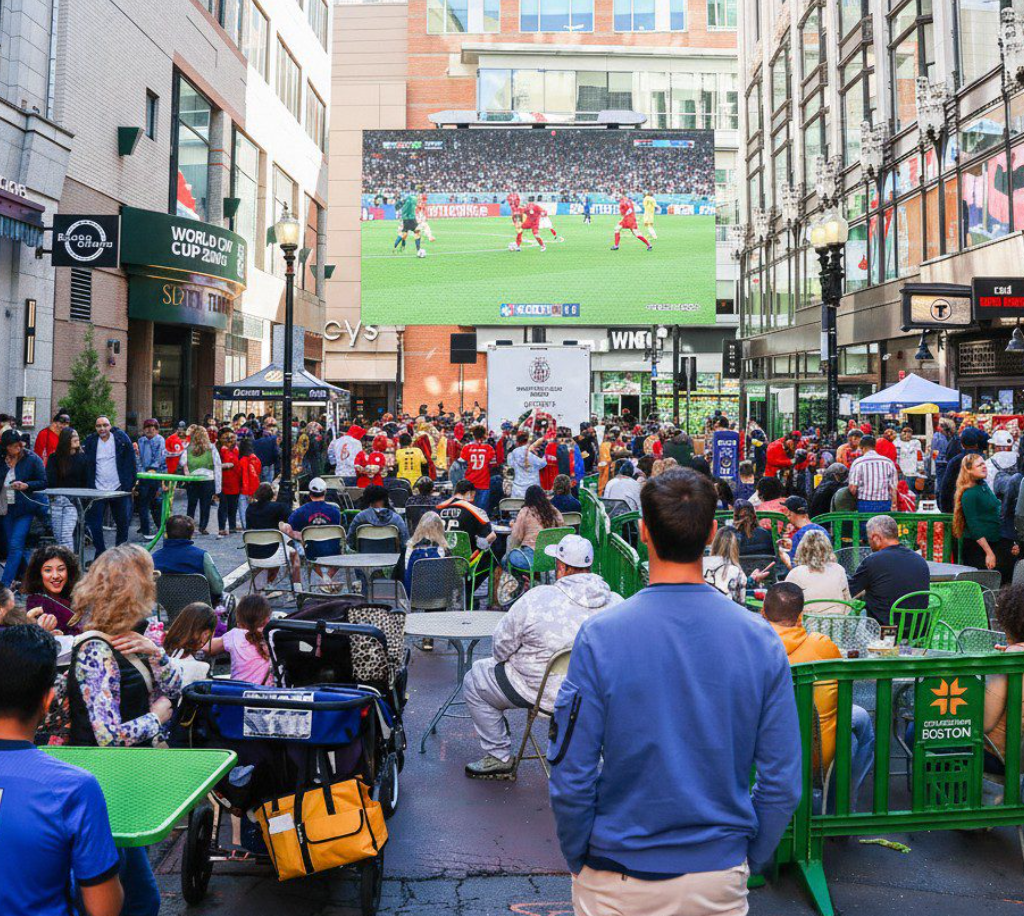
The Tartan Army marched through Boston, Argentina’s Lionel Messi passed Miroslav Klose’s FIFA Men’s World Cup all-time goal scorer record in two games with France’s Kylian Mbappe close behind, Cape Verde earned advanced to the knockouts, and scenes of soccer jersey wearing fans weaving through full crowds in Canada, Mexico, and the United States stuffed every news program and news feed. The Men’s World Cup is here. Every four years the world stops for a month to watch the tournament unroll and this year’s festivities are cohosted by Canada, Mexico, and the U.S.
While the games are already off to a historic start and scenes of revelry dot the Western Hemisphere, a dark undercurrent of serious considerations sits beneath this year’s tournament. Geopolitical conflicts cast a shadow over the event and FIFA’s history of corruption and acquiesence to powerful global figures continues to draw scrutiny. These games also arrive as the U.S. navigates a substance use and overdose crisis—one that has only recently seen a decline in overdose deaths following more than twenty years of steady increases.
Foxborough’s Gillette Stadium plays host to several of The Cup’s games this summer, including Scotland’s first two group stage matches—explaining the Scotland fans, known as the Tartan Army, spotted all over Boston in the tournament’s opening days. Their celebrating and general fascination with Boston quickly became a regional storyline, with radio broadcasters and newscasters finding no shortage of enamored Scottish travelers and equally charmed Bostonians to talk glowingly about the other. Across the region, Cape Verdean communities celebrated the nation’s first appearance in the tournament and watched breathlessly as the team secured three hard fought points in the group stage to qualify for the next round. The tournament has seen dramatic penalty kick shootouts to send perennial European soccer stalwarts Netherlands and Germany home and breakout performances for relative newcomers like Erling Haaland’s Norway, who return to the tournament after nearly thirty years away.
Each game plays out in a patchwork of watch parties and gatherings, fueling a festive atmosphere that stretches well beyond the stadiums. With this festive energy comes a predictable rise in alcohol and other substance use. These quiet, under-discussed products of so many festivities could portend risky behavior. Amid all the celebration there’s cause for pause, reflection, and concern. As public health professionals, we have an obligation to step in with harm reduction principles to make sure people understand the risks they may face and know where to get resources.
Lauren Bard, a BeHERE Trainer, was selected as a volunteer for several of Boston’s World Cup games, helping support the tournament and celebrate the momentousness of Boston hosting. She’s also keenly aware of the risks associated with the games. “The World Cup is a massive party,” she told us. “People drink and drive. People have to find new sources for their drug use. There’s even a party boat going out to one of the islands in the harbor to watch games.”
While there is important attention being paid to public health and alcohol use during this month—asking folks to have a plan, alternating drinks with water, and managing transportation to and from gatherings—less attention has been paid to harm reduction offerings and the use of other substances. While overdose deaths have gone down in Massachusetts, we know that much of this trend is due to work to widen access to life-saving resources, such as fentanyl testing strips and naloxone. Especially given the current uncertain, unregulated, and dangerous drug supply, Bard and others at HRiA have been reminding folks about the importance of safe use and having a plan this season. We continue to share resources like the state’s You Can harm reduction initiative to ensure Massachusetts residents and World Cup travelers have access to safe supplies.
“The World Cup is bigger than the Olympics,” Bard said. “It is more unifying. A central event as opposed to multiple different sports happening.”
For a month every four summers, the world stops to watch the World Cup in collective awe. Bars, backyards, sidewalks, transit hubs, and any place where people might gather become communal spaces where strangers become temporary teammates. There’s celebration and there’s heartbreak on offer on the pitch, and the energy spills into every corner of daily life. As we come together in global connection and celebration, let’s stay safe and carry that same spirit of care into how we celebrate with each other. For the providers, partners, and community leaders who help shape these shared spaces, this is a critical moment to elevate harm reduction strategies, strengthen access to supports, and ensure that the excitement of the tournament is matched by a commitment to keeping people safe.