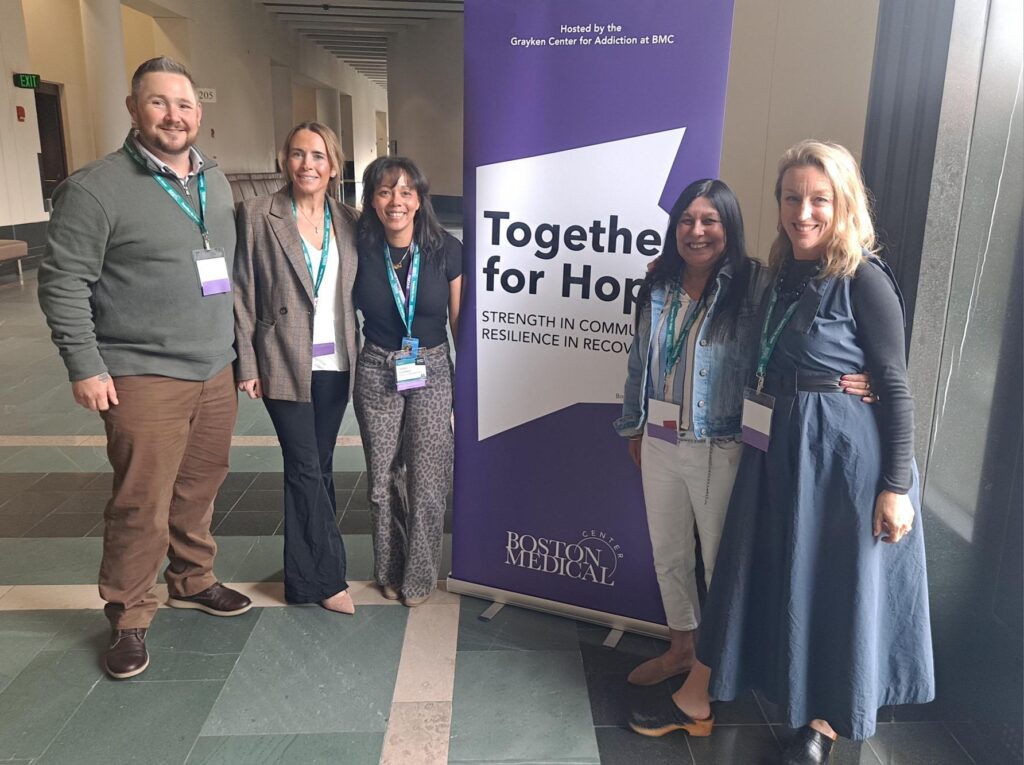
The Together for Hope 2026 conference brought hundreds of service providers, clinicians, and recovery advocates to Boston in late April for two days of learning and connection. The atmosphere at the Hynes Convention Center carried a mix of urgency and passion — a recognition of the scale of the overdose crisis and a shared commitment to finding new paths forward. Conversations flowed between sessions; conference participants discussing approaches, strategies, innovations, and what’s working in their regions.
The conference covered a wide range of topics related to addiction and recovery, including a session devoted to the role of workplaces in supporting recovery. The BeHERE Workplace team led this panel, bringing together voices from several Massachusetts industries.
Lived Experience as a Catalyst for Change
The session, a panel titled Recovery-Supportive Workplaces: Leading with Lived Experience, was moderated by Elizabeth Reardon Hinkley, Associate Director of Capacity Building Assistance at Health Resources in Action and a member of the BeHERE team. It centered on what recovery-supportive workplaces look like in practice. The four panelists represented different Massachusetts industries with distinct cultures but shared challenges around injury, stress, chronic pain, and access to support. Each panelist spoke about their lived experiences, takeaways from their work, and thoughts on the future of recovery-supportive workplaces:
- William “Billy” Vietze, Safety Operations Manager at Permasteelisa North America – Boston and Peer Support Training Coordinator for the Ironworkers District Council of New England, shared how peer support and safety culture can intersect to reduce stigma and strengthen trust.
- Latisha “Tisha” Goullaud, Director of Recovery at the Institute for Health and Recovery, spoke about integrating recovery principles into organizational systems and policies.
- Deb Kelsey, Community Health Liaison at Fishing Partnership Support Services, highlighted how outreach and education can reduce stigma and connect workers to vital resources.
- Melissa Schneiderhan, DC 35 Journeyman Commercial Painter, Mass Building Trades Recovery member, and Director of Communications for Labor Assistance Professionals of Massachusetts, reflected on how recovery leadership within the trades is transforming workplace culture from the inside out.
Throughout the session, the room stayed engaged — these stories resonated across professional backgrounds, even for attendees who work in different industries. The panel made clear that recovery-supportive practices are not abstract concepts; they are lived, relational, and shaped by the realities of specific workplaces.
Recovery-Supportive Workplaces
The panelists’ stories and reflections illustrated the core principles of stigma reduction, harm reduction, and recovery support. They showed how these principles can take shape on job sites, fishing boats, and within organizational systems, and highlighted how workplace injury, stress, and chronic pain can increase risk for substance use and overdose. More than being a site of risk, the panelists envisioned how workplaces can be part of the solution. These insights reflected a theme raised throughout the conference: the need for practical and compassionate approaches that meet people where they are.
The BeHERE Workplace Initiative has been collaborating with workers, unions, and employers across Massachusetts to develop tools that reflect the realities in many different work settings. The panelists brought this work to life, showing how any workplace can be a provider of support. A key component of BeHERE’s work is the Recovery-Supportive Workplace Self-Assessment, a resource designed to help employers understand how supportive their current practices are and identify opportunities for growth and improvement. The Self-Assessment will offer tailored recommendations, model policies, and curated resources. It will launch later this summer alongside an expanded resource library, informed by the voices and insights of workers and organizations across the state.
Looking Ahead
While Together for Hope 2026 was not centered on recovery-supportive workplaces, the BeHERE panel showed how essential workplaces are in the broader landscape of recovery, and how much potential exists when different fields collaborate and learn from one another.
As the BeHERE Workplace Initiative continues refining the Self-Assessment and expanding its resources, the conversations from Together for Hope 2026 are a reminder that significant change is already occurring. Recovery-supportive practices are emerging across different industries, shaped by lived experience and community leadership.
Stay tuned for the Self-Assessment’s release, and for more stories from workplaces leading with lived experience.